

A Study of the "Word" (Logos)
Research by Simon Brown
"In the beginning was the Word, and the Word was with God, and the Word was God." — John 1:1
Introduction
Few passages in the Bible have generated more discussion than John 1:1–5. For centuries, many Christians have understood "the Word" (Greek: Logos) to refer to the pre-existent Son, Jesus Christ. This interpretation forms an important part of Trinitarian theology and is also accepted, in different ways, by several other Christian groups.
In this study, however, I present a different understanding. My conclusion is that the "Word" in John 1:1 is not a second divine person, but God's own Word—His spoken expression, purpose, wisdom, command, and will. Only later, in John 1:14, does that Word become embodied in the man Jesus Christ.
My purpose is not to attack sincere believers, but to encourage every reader to examine the Scriptures carefully, just as the Bereans did (Acts 17:11). The question is not what tradition teaches, but what the biblical text itself actually says.
Quick Facts
- John 1:1 says "the Word was God."
- Psalm 33:6 teaches that creation came by Yahweh's spoken word and the breath of His mouth.
- Throughout the Old Testament, God's "word" is consistently His spoken message, command, purpose, or promise—not another person.
- John begins his Gospel by deliberately echoing Genesis 1:1.
- In John 1:14, God does not become flesh, or is Jesus God who becomes flesh, rather, God's Word becomes flesh in the promised Messiah.
John 1 Begins Where Genesis Begins
John intentionally opens his Gospel with the same words found in Genesis:
"In the beginning..."
His readers are immediately taken back to the creation account.
Genesis records:
"In the beginning God created the heavens and the earth... And God said, 'Let there be light,' and there was light." (Genesis 1:1–3)
Notice that God creates by speaking.
God speaks.
His word goes forth.
Creation comes into existence.
Psalm 33:6 explains this beautifully:
"By Yahweh's word the heavens were made, and all their army by the breath of His mouth."
This verse describes no second divine person. It speaks of Yahweh Himself speaking creation into existence.
For this reason, I understand John 1 to be referring back to Genesis. The "Word" is God's own self-expression—His command, purpose, and creative power.
"The Word Was God"
John writes:
"In the beginning was the Word, and the Word was with God, and the Word was God."
Notice carefully what John does not say.
He does not write:
"In the beginning was the Son."
Nor does he say:
"In the beginning was Jesus."
Instead, he speaks of the Word.
If John had intended his readers to understand that a pre-existent Son personally existed alongside God, one might reasonably expect him to identify the Son directly.
Instead, John uses the term Logos—"Word."
In my understanding, this fits perfectly with the Old Testament, where God's word is repeatedly His own speech, revelation, promise, command, and purpose.
Just as our spoken words come from us without becoming or being separate persons, God's Word comes from God without becoming another God or person.
Therefore, when John says "the Word was God," I understand him to mean that God's Word belongs to God Himself. It expresses His own nature, character, wisdom, and will.
The Word Comes From God's Mouth
Jesus Himself taught:
"Man shall not live by bread alone, but by every word that proceeds from the mouth of God." (Matthew 4:4)
Notice that Jesus identifies the source of God's Word.
It proceeds from the mouth of God.
Likewise, Psalm 33:6 says:
"By Yahweh's word the heavens were made... by the breath of His mouth."
Both passages present God's Word as God's own utterance—not another divine being.
This understanding is consistent throughout the Old Testament.
God speaks.
His Word goes forth.
His Word accomplishes His purpose.
His Word returns to Him having fulfilled what He intended (Isaiah 55:11).
Throughout the Hebrew Scriptures, God's Word is never introduced as a second person existing alongside Yahweh.
John 1:14 — "The Word Became Flesh"
John later writes:
"And the Word became flesh and dwelt among us..."
This verse does not say that God or a second divine person changed into flesh.
Rather, I understand John to be teaching that God's eternal purpose, promise, revelation, and saving Word became fully expressed in the life of Jesus Christ.
Jesus became the living embodiment of God's Word.
This explains why Revelation 19:13 calls Jesus:
"The Word of God."
Notice the expression:
The Word of God.
Jesus is called God's Word because He perfectly reveals His Father.
As Jesus Himself said:
"The words that I say to you I do not speak on My own authority, but the Father who dwells in Me does His works." (John 14:10)
Again Jesus says:
"The word which you hear is not Mine, but the Father's who sent Me." (John 14:24)
These statements emphasize that Jesus faithfully speaks God's Word rather than presenting Himself as the source of that Word.
What Does Logos Mean?
The Greek word translated "Word" in John 1 is λόγος (logos).
The word logos has a wide range of meanings. It can refer to a spoken word, message, statement, teaching, reason, purpose, account, or plan. It does not, by itself, mean "a person."
According to Strong's Concordance, logos can mean:
- A spoken word
- A saying
- A message
- A report
- A command
- A matter or subject
- A declaration
Throughout the New Testament, logos is translated "word" hundreds of times, and in almost every case it refers to God's message or spoken word—not to a person.
For example, Jesus said:
"The word (logos) which you hear is not Mine, but the Father's who sent Me." (John 14:24)
Again He said:
"Sanctify them in the truth; Your word (logos) is truth." (John 17:17)
In neither passage does logos refer to another divine person. It refers to God's message, truth, and revelation.
This consistent biblical usage should be kept in mind when reading John 1.
John 1:2
Most modern translations read:
"He was in the beginning with God."
Because the pronoun is translated "He," many readers naturally assume John is referring to Jesus as a pre-existent person.
However, some scholars point out that the Greek text allows this sentence to refer back to the Word rather than introducing a new person. Historically, several English translations reflected this by using expressions such as "the same" or, in some places, treating the Word as "it" rather than "he."
For this reason, I understand John 1:2 as continuing to describe God's Word, purpose, and self-expression that existed with God in the beginning, rather than introducing a second divine person.
John 1:3
Most modern Bibles read:
"All things were made through Him."
This wording has led many Christians to conclude that Jesus personally created the universe before His birth.
However, a number of earlier English translations rendered the verse differently.
For example:
William Tyndale (1534):
"All things were made by it, and without it was made nothing that was made."
Likewise, the Geneva Bible, the Bishops' Bible, and several other early English translations also used "it" rather than "him."
These translations understood John to be speaking about God's Word—His creative command—rather than another person.
This harmonizes naturally with Psalm 33:6:
"By Yahweh's word the heavens were made, and all their army by the breath of His mouth."
Creation came into existence because God spoke.
God commanded.
His Word accomplished His will.
Psalm 33:9 summarizes it simply:
"For He spoke, and it came to be; He commanded, and it stood firm."
The emphasis throughout Scripture is on God's spoken command, not on another divine being carrying out creation independently of Him.
The Old Testament Never Presents God's Word as a Separate Or Second Person
One of the strongest reasons for my understanding is the consistent teaching of the Old Testament.
Hundreds of times we read expressions such as:
- "The word of Yahweh came..."
- "Thus says Yahweh..."
- "The word of the Lord..."
In every case, God's Word is His communication.
It is His command.
It is His promise.
It is His revelation.
It is His judgment.
It is His purpose.
Nowhere does the Old Testament introduce God's Word as another person existing alongside Yahweh.
Therefore, when John opens his Gospel by speaking of "the Word," I believe his Jewish readers would naturally have understood him to be referring to God's own self-expression, just as the Old Testament repeatedly does.
Why Didn't John Simply Say "The Son"?
This raises an important question.
If John intended to teach that Jesus literally existed beside God before creation, why did he not simply write:
"In the beginning was the Son."
Or:
"In the beginning was Jesus."
Instead, John chose the word Logos.
I believe this choice was intentional.
John first introduces God's eternal Word—His purpose, wisdom, revelation, and creative command.
Only later, in John 1:14, does he identify how that Word became visible in history through the birth of Jesus Christ.
In other words, the story moves from God's eternal purpose to its fulfilment in His Messiah.
Jesus Always Pointed Back to His Father
Throughout His ministry, Jesus consistently directed attention to His Father.
He said:
"I do nothing on My own authority, but speak just as the Father taught Me." (John 8:28)
Again:
"The Father who sent Me has Himself given Me a command—what I should say and what I should speak." (John 12:49)
And again:
"The words that I speak to you I do not speak on My own authority." (John 14:10)
These statements fit naturally with the understanding that Jesus is God's perfect spokesman.
He speaks God's Word because God's Word dwells fully in Him.
He perfectly reveals the Father to the world.
For this reason, John can later describe Jesus as "the Word of God" (Revelation 19:13), because He perfectly embodies and reveals God's message, character, authority, and saving purpose.
----------------------------------------------------------------------------------------------
Hebrews 1:10 – Did God Really Say to the Son, “You Laid the Foundation of the Earth”?
- WHO IS THE ONE TRUE GOD? New video!
- The Greatest Commandment Ever Given — Who Is the One True God?
- Mark 12:29 — Why Did Jesus Quote the Shema?
- Deuteronomy 6:4 — The Shema: "Hear, O Israel, Yahweh Our God Is One"
- John 10:30 — What Did Jesus Mean by "I and the Father Are One"?
- John 8:58 — What Did Jesus Mean by "Before Abraham Was, I Am"?
- John 20:28 — Did Thomas Really Call Jesus Almighty God?
- John 14:9 — "He Who Has Seen Me Has Seen the Father" Explained
- John 17:3 — Jesus Confirmed That the Father Alone Is the Only True God
- John 17:5 — Did Jesus Exist with the Father Before the World Began?
- John 1:1 — Does "The Word Was God" Mean Jesus Is Almighty God?
- 2 Peter 1:1 — Another Trinitarian Misunderstanding?
- Colossians 1:15–17 — Does "Firstborn of All Creation" Mean Jesus Was Created?
- Hebrews 1:2 — Did God Create the Universe or the Ages Through His Son?
- Who Is the Alpha and the Omega?
- Did the Doctrine of the Trinity Originate with Jesus Christ and His Apostles?
- Is Jesus God, or the Son of God? What Does the Whole Bible Teach?
- Scriptures Proving Yahweh: The One True God of Israel Is the Creator Alone.
- John 6:38 — How Did Jesus Come Down From Heaven?


Part 2


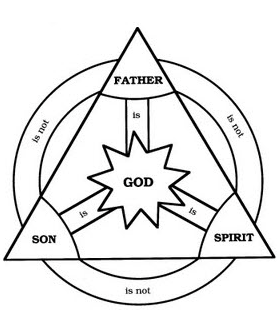
The Trinity faith believe The Father and The Son and The Holy Spirit are THREE separate beings, yet the same ONE TRUE GOD.
Oneness Pentecostal:


For I have not spoken on my own authority, but the Father who sent me has himself given me a commandment—what to say and what to speak. John 12:49.
I will raise up for them a prophet like you from among their brothers. And I will put my words in his mouth, and he shall speak to them all that I command him. Deuteronomy 18:18.
Notice how GOD says: I will put my words in his mouth?
Notice what God tells us here in Deuteronomy 18:18 is identical to John 1:1:
In the beginning was the (Word), and the (Word) was with God, and the (Word) was God. John 1:1.
So we read in Deuteronomy 18:18 and John 1:1 how GOD’s word was WITH GOD and from GOD from the beginning, and that His (word) goes forth.
Notice in John 17:14 how Jesus says the (word logon λόγον) is GODS word, and says nothing about Himself being the word:


So Jesus said to them, “When you have lifted up the Son of Man, then you will know that I am he, and that I do nothing on my own authority, but speak just as the Father taught me. John 8:28
Do you not believe that I am in the Father and the Father is in me? The words that I say to you I do not speak on my own authority, but the Father who dwells in me does his works. John 14:10
For I have given them the words that you gave me, and they have received them and have come to know in truth that I came from you; and they have believed that you sent me. John 17:8

(He) was in the beginning with God.
And in the very next verse of John 1;2 we read another false translation, by the fact the translators have added in the word saying (HE) was in the beginning with God.


But as we see, on close examination, the correct word is (THIS) and NOT (HE).
We now move to John 1:3, where we read: All things were made through him, and without him was not any thing made that was made.
Again, because John 1:3 goes on to say: All things were made through him, and without him was not any thing made that was made, MOST therefore believe GOD created: All things through (him), Jesus.

However, again on close examination, we find there are many other translations of John 1:3, that do not have the word (HIM) but instead say (IT).
Example: Mr Anthony Buzzard has made me aware of many other translations of John 1: like:
"In the beginning was the word, and the worde was with God, and that worde was God. The same was in the begynnyng with God. Althinges were made by it, and without it was made nothing that was made. In it was lyfe, and the lyfe was the light of men. And the light shineth in darkeness, and the darknes comprehended it not” (William Whittingham, The Newe Testament of Our Lord Jesus Christ, Conferred Diligently with the Greke, and Best Approved Translation, Geneva: Conrad Badius, 1557).
“In the beginning was the Worde, and the Worde was with God and that Worde was God. The same was in the beginning with God. All things were made by it, and without it was made nothing that was made. In it was lif, and the lif was the light of men. And the light shineth in the darkenes, and the darkenes comprehended it not” (Geneva Bible, The Bible and Holy Scriptures conteyned in the Olde and Newe Testament, Geneva: Rouland Hall, 1560).
“In the beginning was the Word, and the Word was with God, and God was that Word. The same was in the beginning with God. All things were made by it, and without it, was made nothing that was made. In it was life, and the life was the light of men. And the light shineth in the darknesse, and the darknesse comprehendeth it not” (Bishops’ Bible, The Holie Bible, London: Richard Jugge, 1568).
“In the beginning was that Word, and that Word was with God, and that Word was God. This same was in the beginning with God. All things were made by it, and without it was made nothing that was made. In it was life, and that life was the light of men. And that light shineth in the darknes, and the darknesse comprehended it not” (Lawrence Tomson, The New Testament of Our Lord Jesus Christ, Translated out of Greeke by Theod. Beza, London: Robert Barker, 1607).
In the beginning there was God’s Grand Design, the declaration of His Intention and Purpose, and that declaration was with God as His project, and it was fully expressive of God Himself. This was with God in the beginning. Everything came into being through it, and without it nothing of what came into being existed. In it there was life and that life was the light of men. And the light shines in the darkness and the darkness does not overwhelm it. A Translation of John’s Gospel from the Greek by Anthony Buzzard
Please go to the link: John 1 in 50+ English Translations. Sir Anthony Buzzard, and there you will see there are many Translations that have the word (IT) and not (HIM) used in John 1:3.
What did John say and mean in John 1:1, 2 and 3?
Is the word in John 1:1 Jesus?
World English Bible:
By Yahweh’s word, the heavens were made; all their army by the breath of his mouth.
There is NO second PERSON here, but ‘ Yahweh'' GOD the FATHER alone.
Hence, this is why we read John saying: and the (Word) was God. John 1:1c, Yahweh’s word, and the breath of (Yahweh’s) mouth.
There is only ONE person who is called Yahweh, and He is GOD the FATHER.
John is telling us the (word) was GOD because the (word) is FROM GOD, so the words GOD speaks are GOD the Fathers.

Most translations get this wrong since they want you to believe “in the beginning was the SON” A false Jesus, not really human Yes, Isa is absolutely clear. God was totally alone at creation The word “word” is hundreds of times not another person! It is only because of the false creeds of Christendom that people imagine a second God.
The text says the word was GOD Himself, ie not another person. Error has driven people insane and our task is to try to help them as we have been helped. Jews and Moslems, millions of them, are right offended at a Triple God, in hope, Anthony www.restorationfellowship.org


https://biblehub.com/lexicon/john/17-5.htm
ReplyDelete“I” continually existed BEFORE there was a universe.Personal pronoun I not one of His titles logos. Buzzard a theological quack.
John 17:5 Correct Understanding.
DeleteAnd now glorify Me, You Father, with Yourself, with the glory that I had with You before the world existed. BLB.
As normal, most of Christianity are deceived and confused with understanding the truth of what Jesus actually meant here in John 17:15 by believing Jesus was teaching He EXISTED WITH GOD before the world existed.
Notice how Jesus did NOT say: And now glorify Me, You Father, with Yourself, with the glory that I had with You (WHEN I WAS ALREADY WITH YOU) before the world existed.
The obvious facts are:
1. If Jesus is GOD who is WITH GOD as most believe, that equals TWO GODS side by side contradicting the word of GOD who says:
I am Yahweh, and there is none else. Besides me, there is no God. WEB.
2. if Jesus is the SAME One True GOD, as most believe, then Jesus could NOT be with His GOD if they are the SAME One True GOD.
3. Jesus said in John 20:17 'I am ascending to My Father and your Father, and to My God and your God.'"
if Jesus is the SAME One True GOD, as most believe, then how is it possible that Jesus Father is His GOD, when the One True GOD does NOT have a One True GOD above Him?
The Correct Meaning:
The simple truth is that Jesus is NOT GOD, and Jesus was NOT WITH His GOD before He was born as a MAN in John 1:14.
John 17:5: And now glorify Me, You Father, with Yourself,
Jesus was praying to His Father that many of the old Testament Bible prophecies would now be fulfilled, as He was near the end of His ministry and was about to be crucified and raised from the dead to be with His Father (in glory) as our High Priest, Advocate and Mediator, where GODS plan would continue since before the world begun, and the Son would receive (glory), which He worked in Christ, having raised Him out from the dead, and having set Him at His right hand in the heavenly realms, Ephesians 1:20
with the glory that I had with You before the world existed.
Jesus is simply referring to Himself as the (glory) He had with His Father before He physically existed, and that (glory) was in GODS mind and purpose as the highest in precedence to be the promised Messiah in: the determinate plan and foreknowledge of God, Acts 2:23, He was known before the foundation of the world 1 Peter 1:20.
Notice Jesus is for-known in GODS plan, and NOT physically existing.
But you, Bethlehem Ephrathah, who are small among the clans of Judah, out of you will come forth for Me One to be ruler over Israel, whose origins are of old, from the days of eternity. Micah 5:2
Conclusion:
Jesus prayed to receive the (Glory) GOD promised before the world existed, before Jesus physically existed, that He would now be WITH His Father and GOD: But from now on the Son of Man will be seated at the right hand of the power of God.” Luke 22:69, fulfilling Bible prophecies, and to continue with fulfilling the Greatest Bible Prophecy yet to come when Jesus will return as the Prince of Peace with His Father as ONE, as a Father and SON.
So also Christ did not glorify Himself to become a high priest, but the One having said to Him: "You are My Son, today I have begotten You."
Hebrews 5:5
But this One, having offered one sacrifice for sins in perpetuity, sat down at the right hand of God, Hebrews 10:12
After the Lord Jesus had spoken to them, He was taken up into heaven and sat down at the right hand of God.
Mark 16:19
Therefore indeed the Lord Jesus, after speaking to them, was taken up into the heaven and sat at the right hand of God.
Mark 16:19
Full article here: https://wwwrealdiscoveriesorg-simon.blogspot.com/2019/06/john-175-yet-again-another-trinitarian.html
Exactly
ReplyDelete