Jesus declared the Shema—"Hear, O Israel: Yahweh is our God; Yahweh is one" (Deuteronomy 6:4)—to be the greatest commandment ever given (Mark 12:29). This study examines why this confession stood at the heart of Israel's faith, why God commanded His people to remember it daily, and what it teaches Christians today about the one true God and true worship.
The Greatest Commandment Ever Given — Does Modern Christianity Still Believe It?
Part 1 – The Greatest Commandment Ever Given
"The foremost is, 'Hear, O Israel: The Lord our God, the Lord is one.'"
— Jesus Christ, Mark 12:29
Throughout history, countless books have been written about God.
Churches have debated doctrine for centuries. Councils have formulated creeds. Scholars have produced volumes of theological works, and millions of Christians have inherited beliefs that have been passed down from generation to generation.
Yet before we ask what later traditions taught, there is a far more important question.
What did God Himself reveal about His own identity?
And what did Jesus Christ declare to be the greatest commandment ever given?
Surely, if there is one teaching that every believer should know, understand, and obey above all others, it must be the commandment that both God and His Son placed above every other commandment recorded in Scripture.
Remarkably, many Christians can quote verses about grace, faith, forgiveness, salvation, or eternal life. Yet comparatively few stop to consider the commandment that Jesus Himself described as the foremost of all.
That alone should cause every sincere student of the Bible to pause and ask an important question:
If Jesus called this the greatest commandment, why is it so rarely discussed today?
This study is not an attempt to defend tradition, nor is it an attempt to attack tradition.
Its purpose is much simpler.
It is an invitation to begin where both God and Jesus began.
To allow Scripture to speak for itself.
To compare Scripture with Scripture.
And to examine whether our own beliefs truly rest upon the foundation laid by God Himself.
The Foundation of Israel's Faith
More than three thousand years ago, as the people of Israel prepared to enter the Promised Land, God gave them a command unlike any other.
This was not simply another law among hundreds of commandments.
It became the very foundation of Israel's worship, identity, and relationship with God.
Moses declared:
"Hear, Israel: Yahweh is our God; Yahweh is one."
— Deuteronomy 6:4 (WEB)
These words became known as the Shema, from the opening Hebrew word meaning "Hear" or "Listen."
But this was far more than a sentence to memorise.
It was God's own declaration of who He is.
Immediately afterwards, God commanded His people:
"You shall love Yahweh your God with all your heart, with all your soul, and with all your might. These words, which I command you today, shall be on your heart. You shall teach them diligently to your children, and shall talk of them when you sit in your house, when you walk by the way, when you lie down, and when you rise up."
— Deuteronomy 6:5–7
Notice the extraordinary emphasis.
God did not simply tell His people to remember these words.
He commanded that they should be written upon their hearts.
Parents were instructed to teach them diligently to their children.
Families were to speak about them throughout the day.
They were to remember them when they rose in the morning and before they lay down at night.
Why would God place such extraordinary importance upon one commandment?
The answer becomes clear as we read the rest of the Old Testament.
Again and again Israel abandoned the living God and turned to the false gods of the surrounding nations.
The greatest danger facing God's people was not merely moral failure.
It was forgetting who the true God is.
For this reason, God continually reminded Israel of the most fundamental truth they must never forget.
There is only one true God.
Everything else rested upon that foundation.
Jesus Confirmed Nothing Had Changed
More than a thousand years later, Jesus Christ was asked one of the most important questions ever put to Him.
A scribe came to Him and asked:
"Which commandment is the greatest of all?"
If there had ever been a moment to replace the commandment given through Moses, this would have been it.
If God's revelation concerning Himself had changed, surely Jesus would have explained it here.
But He did not.
Instead, Jesus immediately returned to the very words spoken by God through Moses centuries earlier.
"The foremost is, 'Hear, O Israel: The Lord our God, the Lord is one.'"
— Mark 12:29
Jesus did not introduce a new commandment.
He reaffirmed the old one.
The same commandment that had stood at the centre of Israel's faith remained, according to Jesus Himself, the greatest commandment of all.
The scribe immediately recognised the importance of Jesus' answer and replied:
"Right, Teacher. You have truly said that He is one, and there is no other besides Him."
— Mark 12:32
Notice carefully what happened next.
Jesus did not correct the scribe.
He did not suggest he had misunderstood.
Instead, we read:
"When Jesus saw that he answered wisely, He said to him, 'You are not far from the kingdom of God.'"
— Mark 12:34
This brief conversation deserves careful reflection.
The greatest commandment was not presented as a mystery.
Neither Jesus nor the scribe entered into a complicated philosophical discussion.
The truth was stated plainly.
It was understood clearly.
And the scribe was commended by Jesus for answering wisely.
Why Every Christian Should Know This Commandment
If God commanded Israel to place these words upon their hearts...
If parents were commanded to teach them diligently to their children...
If they were to be spoken morning and evening...
If Jesus Himself declared them to be the foremost of all commandments...
Then should they not also stand at the very centre of Christian faith today?
Every Christian, regardless of denomination or tradition, should know this commandment.
Not merely because it appears in the Old Testament.
But because Jesus Himself declared it to be the greatest commandment of all.
That alone should cause us to ask another important question.
If this is the greatest commandment ever given, why do so few Christians study it in depth today?
Perhaps we have become so familiar with these words that we no longer appreciate their importance.
Or perhaps we have simply assumed we already understand them.
Whatever the reason, the greatest commandment deserves far more than a passing glance.
It deserves our careful attention.
The Journey Begins Here
Throughout this study we will not ask readers to accept conclusions without evidence.
Instead, we will allow Scripture to interpret Scripture.
We will examine the historical setting.
We will consider the words of Moses, the prophets, Jesus, and the apostles.
We will compare passage with passage.
And we will ask whether the beliefs held by Christians today reflect the foundation laid by God Himself.
Only after establishing that foundation will we begin examining later theological questions.
For there can be no better place to begin than where both God and Jesus began.
With the greatest commandment ever given.
In Part 2, we will examine why God commanded Israel to repeat these words continually, why this declaration became the very heart of biblical worship, and why understanding its historical setting is essential before we examine any later doctrinal questions.
Part 2 – Why God Commanded Israel to Repeat These Words Every Day
When we read the Bible carefully, one remarkable fact immediately stands out.
God did not simply give Israel the greatest commandment and then leave His people to remember it as best they could.
Instead, He commanded that it should become part of their everyday lives.
Immediately after declaring:
"Hear, Israel: Yahweh is our God; Yahweh is one."
— Deuteronomy 6:4 (WEB)
God continued:
"These words, which I command you today, shall be on your heart. You shall teach them diligently to your children, and shall talk of them when you sit in your house, when you walk by the way, when you lie down, and when you rise up. You shall bind them for a sign on your hand, and they shall be for symbols between your eyes. You shall write them on the doorposts of your house and on your gates."
— Deuteronomy 6:6–9
These instructions are unlike almost any others found in the Law.
God did not merely command His people to believe these words.
He commanded them to live them.
Parents were to teach them to their children.
Families were to discuss them in their homes.
They were to remember them when they began the day and before they slept at night.
They were even instructed to write them upon the doorposts of their homes as a continual reminder.
Why would God place such extraordinary emphasis upon one declaration?
Surely the answer must be found in Israel's history.
The Greatest Danger Facing God's People
From the very beginning, Israel faced one constant temptation.
It was not simply immorality.
It was not merely injustice.
It was the temptation to forget the God who had redeemed them and to follow the gods of the nations around them.
Only weeks after witnessing God's mighty power at the Red Sea, the people made and worshipped the golden calf (Exodus 32).
Later generations repeatedly turned to Baal, Asherah, Molech, and countless other gods worshipped by the surrounding nations.
Again and again the prophets warned Israel to return to Yahweh alone.
The Bible repeatedly records the same tragic pattern.
God remained faithful.
His people often did not.
That is why the first commandment declared:
"You shall have no other gods before Me."
— Exodus 20:3
And this is why Deuteronomy 6:4 became the foundation of Israel's daily worship.
Every morning.
Every evening.
Every generation.
God's people were reminded of the One whom they alone were to worship.
The Heart of Biblical Worship
To many modern readers, Deuteronomy 6:4 may appear to be just another verse in the Old Testament.
To Israel, it was much more.
It became the heart of their confession of faith.
For centuries, faithful Jews recited these words daily, reminding themselves and their families that the God who had brought them out of Egypt remained the only true God worthy of their worship.
This confession shaped their identity.
It reminded them who they belonged to.
It reminded them where their loyalty lay.
Everything else flowed from this foundation.
Their worship.
Their obedience.
Their hope.
Their future.
Before Israel could obey God, they first had to know who God is.
Why Jesus Began Here
When the scribe approached Jesus and asked:
"Which commandment is the greatest of all?"
Jesus could have quoted any one of hundreds of commandments found throughout the Law.
Instead, He returned immediately to Deuteronomy 6:4.
That choice was not accidental.
Jesus was directing the scribe back to the very foundation that God Himself had established through Moses.
Before speaking about loving our neighbour...
Before speaking about sacrifice...
Before speaking about eternal life...
Jesus began with knowing and acknowledging the One true God.
That alone should cause every Christian to stop and think.
If Jesus considered this to be the greatest commandment ever given, should it not also remain the foundation of our faith today?
A Question Worth Asking
As we have seen, God commanded His people to remember these words continually.
Parents were to teach them diligently.
Children were to grow up hearing them.
Families were to speak about them every day.
Jesus later confirmed that nothing had changed.
He declared these same words to be the foremost commandment of all.
Yet how often do we hear sermons devoted entirely to the greatest commandment?
How often do Christians stop to ask why God placed such extraordinary emphasis upon these words?
These are not questions of mere curiosity.
They lie at the very foundation of biblical faith.
Before examining any later doctrines or theological systems, we must first understand the commandment that God gave, that Israel treasured, and that Jesus Himself declared to be the greatest of all.
For if we fail to understand the foundation, how can we hope to evaluate everything that has been built upon it?
In Part 3, we will examine Jesus' remarkable conversation with the scribe in Mark 12:29–34. There we will discover why Jesus praised the scribe for his answer, why the scribe declared, "He is one, and there is no other besides Him," and why this short conversation may be one of the most overlooked passages in the entire New Testament.
Part 3 – Jesus Confirmed the Greatest Commandment
By the time Jesus began His public ministry, the Jewish religious leaders had developed hundreds of laws, traditions, and interpretations that governed almost every aspect of daily life.
Among these were countless discussions about which commandments carried the greatest importance.
Some teachers elevated the Sabbath above all else.
Others emphasised ceremonial laws, sacrifices, or ritual purity.
It was into this setting that one of the scribes approached Jesus with a question that every believer should consider carefully.
Mark records:
"One of the scribes came, and heard them questioning together. Knowing that He had answered them well, asked Him, 'Which commandment is the greatest of all?'"
— Mark 12:28
This was no ordinary question.
If Jesus wished to reveal a new understanding of God, or introduce a new foundation for faith, this was the perfect opportunity.
Instead, Jesus answered without hesitation.
"The foremost is, 'Hear, O Israel: The Lord our God, the Lord is one; and you shall love the Lord your God with all your heart, with all your soul, with all your mind, and with all your strength.' This is the first commandment."
— Mark 12:29–30
Notice what Jesus did.
He did not begin with Himself.
He did not begin with miracles.
He did not begin with prophecy.
He did not begin with His own identity.
He began exactly where God had begun through Moses over a thousand years earlier.
The greatest commandment had not changed.
The Scribe's Remarkable Response
The scribe immediately recognised the significance of Jesus' answer.
He replied:
"Right, Teacher. You have spoken the truth; for He is one, and there is no other but He."
— Mark 12:32
This statement deserves careful thought.
The scribe did not argue with Jesus.
Neither did Jesus correct the scribe.
Instead, both were in complete agreement concerning the greatest commandment.
The scribe openly affirmed two important truths.
First:
"He is one."
Second:
"There is no other besides Him."
These were not new ideas.
They echoed the repeated declarations found throughout the Law, the Prophets, and the writings of Israel.
The scribe understood that the greatest commandment was not merely about reciting words.
It was about acknowledging the God whom Israel worshipped and recognising that there was no other besides Him.
Jesus Praised the Scribe
What happened next is often overlooked.
Mark continues:
"When Jesus saw that he answered wisely, He said to him, 'You are not far from the kingdom of God.'"
— Mark 12:34
These are remarkable words.
Jesus did not say the scribe had misunderstood.
He did not suggest that his understanding needed correcting.
Instead, Jesus praised him for answering wisely.
This raises an important question.
Why did Jesus commend the scribe?
Surely it was because the scribe had understood the very foundation of biblical faith.
He recognised the importance of the greatest commandment.
He understood the declaration first given through Moses.
And he acknowledged the God of Israel exactly as Jesus Himself had affirmed Him.
The Greatest Commandment Was Never Presented as a Mystery
One striking feature of this conversation is its simplicity.
There is no philosophical discussion.
There is no complicated theological explanation.
Neither Jesus nor the scribe suggests that the greatest commandment is difficult to understand.
Instead, Jesus simply quotes Scripture.
The scribe agrees.
Jesus commends him.
The conversation ends.
This simplicity should encourage every reader of the Bible.
The greatest commandment was not hidden from ordinary people.
It was not reserved for scholars or religious leaders.
It was given to the whole nation of Israel.
Parents were commanded to teach it to their children.
Children were expected to grow up knowing it.
And Jesus declared that it remained the foremost commandment for everyone.
A Question That Deserves Careful Thought
If the greatest commandment was so clear...
If Jesus reaffirmed it without alteration...
If the scribe answered wisely...
And if Jesus publicly praised that answer...
Then every Christian should ask an honest question.
Have we given this commandment the same place in our faith that Jesus gave it?
Before we consider later theological developments...
Before we examine difficult passages...
Before we discuss centuries of doctrinal debate...
Should we not first ensure that we fully understand the very commandment that Jesus declared to be the greatest of all?
That is the journey on which we now continue.
In Part 4, we will begin examining the Old Testament itself, exploring why the prophets repeatedly declared that Yahweh alone is God, why they continually warned Israel against false worship, and how these declarations reinforce the foundation laid by the greatest commandment itself.
Part 4 – The Prophets Never Changed the Greatest Commandment
One of the strongest pieces of evidence for understanding the greatest commandment is often overlooked.
If Deuteronomy 6:4 really formed the very foundation of Israel's faith, then we should expect the prophets of God to teach exactly the same truth.
And that is precisely what we find.
From Moses to Malachi, the prophets never replaced, modified, or expanded the declaration:
"Hear, O Israel: Yahweh is our God; Yahweh is one."
— Deuteronomy 6:4
Instead, they repeatedly called God's people back to the same foundation whenever Israel wandered into idolatry.
Their message was remarkably consistent.
There is only one true God.
Worship Him alone.
The Constant Battle Against False Gods
Throughout the Old Testament, Israel repeatedly abandoned the God who had delivered them from Egypt.
Instead of remaining faithful to Yahweh, they adopted the religions of the nations around them.
They worshipped Baal.
They worshipped Asherah.
They offered sacrifices to Molech.
They trusted in idols made from wood, stone, silver, and gold.
The history of Israel is, sadly, the history of a people continually tempted to exchange the worship of the living God for the worship of false gods.
For this reason, God continually raised up prophets to call His people back.
Notice what King Hezekiah prayed:
"Yahweh, the God of Israel... You alone are God over all the kingdoms of the earth. You have made heaven and earth."
— 2 Kings 19:15 (WEB)
A few verses later he prayed again:
"Now therefore, Yahweh our God, save us... that all the kingdoms of the earth may know that You, Yahweh, are God alone."
— 2 Kings 19:19
Notice the emphasis.
Hezekiah did not simply confess that Yahweh is God.
He declared:
"You alone are God."
This language echoes the very heart of the greatest commandment.
God Spoke Through Isaiah
The prophet Isaiah repeatedly recorded God's own words concerning Himself.
Few chapters in Scripture express God's uniqueness more clearly than Isaiah 40–48.
Again and again, God declares:
"I am Yahweh, and there is no one else. Besides Me there is no God."
— Isaiah 45:5
Again:
"There is no God besides Me, a just God and a Saviour; there is no one besides Me."
— Isaiah 45:21
And again:
"Turn to Me, and be saved, all the ends of the earth; for I am God, and there is no other."
— Isaiah 45:22
These declarations are not presented as complex theological mysteries.
They are simple, direct, and repeated.
The God who first declared Himself to Israel in Deuteronomy continued to reveal Himself in exactly the same way through His prophets.
God Alone Created
Isaiah also records another remarkable declaration.
God says:
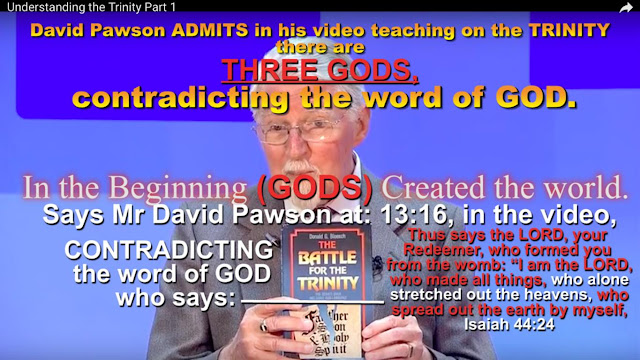
"I am Yahweh, who makes all things; who alone stretched out the heavens; who spread out the earth by Myself."
— Isaiah 44:24
Notice the language.
God describes Himself as acting alone.
He says He stretched out the heavens by Himself.
Whether one agrees with every theological conclusion that may later be drawn from this verse or not, the passage itself places great emphasis on God's unique role and His sovereign power.
It is another reminder that the prophets continually directed Israel's attention back to Yahweh Himself.
The Message Never Changed
When we step back and look at the whole Old Testament, a remarkable pattern emerges.
Moses declared that Yahweh is one.
Joshua called Israel to serve Yahweh alone.
David worshipped Yahweh alone.
Hezekiah prayed to Yahweh alone.
Isaiah proclaimed there is no God besides Yahweh.
The prophets did not introduce a different understanding of God.
They continually reinforced the same foundation.
Whenever Israel drifted towards false worship, the solution was always the same.
Return to Yahweh.
Return to the God of Abraham, Isaac, and Jacob.
Return to the One who revealed Himself to Moses.
The Evidence Continues to Build
By now, a clear picture is beginning to emerge.
God declared His identity through Moses.
He commanded His people to remember it every day.
Jesus reaffirmed it as the greatest commandment.
The prophets continually repeated the same truth throughout Israel's history.
The foundation remains remarkably consistent.
As we continue this journey, we must allow that foundation to guide our understanding of every other passage we examine.
Only then can we ask the next important question.
Did the apostles continue teaching this same foundation after the resurrection of Jesus Christ?
That is the subject of Part 5, where we will examine the teaching of the New Testament writers and ask whether they continued proclaiming the same understanding of God that had been declared by Moses, reaffirmed by Jesus, and preached by the prophets.
Part 5 – Did the Apostles Continue Teaching the Same Foundation?
By this point in our journey, one truth has become impossible to ignore.
God declared:
"Hear, Israel: Yahweh is our God; Yahweh is one."
— Deuteronomy 6:4
Jesus later confirmed these very words as the first and greatest commandment.
The prophets repeatedly called Israel back to this same foundation whenever the nation drifted into false worship.
The evidence is remarkably consistent.
But another important question now arises.
Did the apostles continue teaching this same foundation after Jesus had been raised from the dead and had ascended into heaven?
If God had revealed something entirely new about His own identity, we would surely expect the apostles to explain it clearly.
After all, they were entrusted with proclaiming the Gospel to the world.
If the greatest commandment had changed, or if the understanding of God had fundamentally changed, this would have been one of the most important truths they could ever preach.
So what do we actually find?
Paul's Declaration
Writing to the believers in Corinth, the Apostle Paul addressed a subject that had troubled Christians concerning idols and false gods.
His conclusion is striking.
"Yet to us there is one God, the Father, from whom are all things, and we exist for Him; and one Lord, Jesus Christ, through whom are all things, and we exist through Him."
— 1 Corinthians 8:6
Notice how carefully Paul writes.
He distinguishes between the one God, the Father, and the one Lord, Jesus Christ.
He does not present this statement as a departure from the faith of Israel.
Rather, he writes to people who already understood the declaration of Deuteronomy 6:4 and explains the relationship between the Father and His Messiah within that framework.
This verse deserves careful study in its own right, and we will examine it more fully in a later article.
For now, it is enough to observe that Paul still speaks of one God and identifies that one God as the Father.
The Testimony of Jesus
The apostles were not inventing a new religion.
They were proclaiming the message they had learned from Jesus Himself.
Consider Jesus' own prayer shortly before His arrest.
He prayed to His Father:
"This is eternal life, that they should know You, the only true God, and Him whom You sent, Jesus Christ."
— John 17:3
These words deserve careful reflection.
Jesus distinguishes between the One to whom He is praying and the One whom that God has sent.
This passage will also be examined in detail later in this series.
For now, it reminds us once again that Jesus continually directed people toward His Father.
The Apostle John
Near the end of his life, the Apostle John warned believers about deception.
He wrote:
"Who is the liar but he who denies that Jesus is the Christ? This is the antichrist, he who denies the Father and the Son."
— 1 John 2:22
Notice John's language.
He speaks of the Father and the Son.
Throughout his letter, John consistently maintains this distinction.
His concern is that believers continue confessing Jesus as the Christ, the Son whom the Father has sent into the world.
This warning deserves careful attention and will become especially important later in this series as we examine various teachings concerning the identity of Jesus.
Peter's Warning
The Apostle Peter also warned the early church that false teaching would arise.
He wrote:
"But false prophets also arose among the people, as false teachers will also be among you, who will secretly bring in destructive heresies, denying even the Master who bought them, bringing on themselves swift destruction."
— 2 Peter 2:1
Peter did not suggest that false teaching would always appear openly.
He warned that it could be introduced secretly, making careful examination of every doctrine essential.
For this reason, Christians should never accept a teaching merely because it has become popular or has been repeated for many generations.
Every doctrine must ultimately be tested against the Scriptures.
Searching the Scriptures
The Bereans were commended because they did exactly that.
Luke records:
"Now these were more noble than those in Thessalonica, for they received the word with all readiness of mind, examining the Scriptures daily to see whether these things were so."
— Acts 17:11
Notice that the Bereans did not reject Paul's teaching.
Neither did they accept it blindly.
They searched the Scriptures to determine whether what they were hearing agreed with God's revealed Word.
That same attitude should characterise every Christian today.
The purpose of this study is not to ask readers to accept conclusions simply because they are presented here.
Rather, it is an invitation to search the Scriptures carefully, compare passage with passage, and allow God's Word to speak for itself.
The Journey Continues
From Moses...
To the prophets...
To Jesus...
And now to the apostles...
The importance of understanding the identity of God remains central throughout the whole Bible.
This is not a minor subject.
It is the foundation upon which all true worship rests.
As we continue this study, we will begin asking some difficult but necessary questions.
Could it be that sincere Christians have inherited ideas about God that deserve to be re-examined in the light of Scripture?
If so, how should we approach those questions with humility, honesty, and a willingness to follow wherever God's Word leads?
In Part 6, we will begin examining some of the beliefs that developed after the apostolic age and ask whether they fully reflect the biblical foundation established by Moses, affirmed by Jesus, preached by the prophets, and proclaimed by the apostles.
Part 6 – Does Every Christian Doctrine Begin with the Greatest Commandment?
As we have travelled through the Scriptures together, one remarkable truth has emerged with increasing clarity.
God declared:
"Hear, Israel: Yahweh is our God; Yahweh is one."
— Deuteronomy 6:4
Jesus reaffirmed these very words as the first and greatest commandment.
The prophets continually called Israel back to this same foundation whenever the nation drifted into false worship.
The apostles continued directing believers to the one God, the Father, while proclaiming Jesus as the Christ whom God had sent.
This raises a question that every sincere Christian should be willing to ask.
Do all of our beliefs about God begin with the greatest commandment?
Or have some teachings developed that should be carefully re-examined in the light of Scripture?
Testing Every Doctrine
The Bible never asks believers to accept a doctrine simply because it is ancient, popular, or widely accepted.
Instead, Christians are repeatedly encouraged to examine everything carefully.
Paul wrote:
"Test all things, and hold firmly that which is good."
— 1 Thessalonians 5:21
Luke praised the Bereans because they examined the Scriptures daily to see whether the things they were were taught were true (Acts 17:11).
This is not scepticism.
It is faithful obedience.
Every Christian has both the privilege and the responsibility to compare every teaching with the Word of God.
If a doctrine is true, it will stand the test of Scripture.
The Greatest Commandment Must Come First
Imagine constructing a house.
No builder begins with the roof.
Everything depends upon the foundation.
If the foundation is wrong, every wall and every roof built upon it will eventually be affected.
The same principle applies to biblical doctrine.
Before asking difficult questions about individual passages...
Before discussing later creeds...
Before considering centuries of theological debate...
We must first ask:
Does our understanding begin where God began?
Does it begin with the declaration that Jesus Himself called the greatest commandment?
If not, then we owe it to ourselves—and to God—to examine the foundation before continuing to build.
A Question Modern Christianity Should Consider
Today, Christians hold many different views concerning the nature of God.
Some doctrines developed over many centuries.
Others were formulated through church councils and theological debate.
Many believers have inherited these teachings from childhood and have never been encouraged to examine how they relate to the greatest commandment.
This article is not asking anyone to abandon sincerely held beliefs without careful thought.
Nor is it asking anyone to accept new conclusions without evidence.
It is asking something much simpler.
Have we compared every doctrine with the greatest commandment that God gave and Jesus reaffirmed?
That is a question every follower of Christ should be willing to ask.
Warnings Against False Teaching
The New Testament repeatedly warns believers that false teaching would arise within the Christian community.
Jesus Himself warned:
"Many false prophets will arise and will lead many astray."
— Matthew 24:11
He also warned:
"For false christs and false prophets will arise and perform great signs and wonders, so as to deceive, if possible, even the elect."
— Matthew 24:24
The apostles gave the same warning.
Peter wrote:
"But false prophets also arose among the people, as false teachers will also be among you, who will secretly bring in destructive heresies..."
— 2 Peter 2:1
John likewise warned:
"Who is the liar but he who denies that Jesus is the Christ? This is the antichrist, he who denies the Father and the Son."
— 1 John 2:22
These are among the most serious warnings found anywhere in the New Testament.
For that reason, every Christian should approach the subject of God's identity with humility, prayer, and a sincere desire to understand exactly what the Scriptures teach.
The Journey Has Only Begun
So far, we have established one simple but profound truth.
The greatest commandment stands at the very beginning of any biblical understanding of God.
Everything else must be examined in the light of that foundation.
As we continue this series, we will begin looking at individual passages that have been understood in different ways throughout Christian history.
Rather than assuming their meaning, we will carefully examine each one in its context, compare Scripture with Scripture, and ask what the biblical writers intended their readers to understand.
Only then can we honestly answer whether later theological conclusions reflect the teaching of the Bible itself.
In the next study, we will begin with one of the most frequently quoted passages in this discussion:
"I and the Father are one."
— John 10:30
What did Jesus really mean?
Was He declaring that He is the same God as the Father?
Or was He speaking of another kind of oneness entirely?
That question deserves a careful investigation, and we will allow the Scriptures themselves to provide the answer.
Part 7 – A Question Every Christian Must Answer
Throughout this study we have deliberately begun where both God and Jesus began.
We have not started with later creeds.
We have not started with church councils.
We have not begun with theological systems that developed centuries after the New Testament.
Instead, we have asked one simple question.
What did God Himself declare?
The answer has remained remarkably consistent throughout the Scriptures.
God declared through Moses:
"Hear, Israel: Yahweh is our God; Yahweh is one."
— Deuteronomy 6:4 (WEB)
He commanded these words to be placed upon the hearts of His people.
Parents were to teach them diligently to their children.
They were to speak about them throughout the day.
They were to remember them morning and evening.
This was not merely another commandment.
It became the very foundation of Israel's faith.
More than a thousand years later, Jesus was asked the greatest question that could ever be asked concerning God's Law.
"Which commandment is the greatest of all?"
Without hesitation, Jesus returned to the very same words spoken by Moses.
"The foremost is, 'Hear, O Israel: The Lord our God, the Lord is one.'"
— Mark 12:29
Nothing had changed.
The greatest commandment remained exactly the same.
The scribe replied:
"You have truly said that He is one, and there is no other besides Him."
— Mark 12:32
Jesus did not correct him.
Instead, He commended him.
"You are not far from the kingdom of God."
— Mark 12:34
The prophets proclaimed the same message.
The apostles continued directing believers to the one God, the Father, while proclaiming Jesus as the Christ whom God had sent.
From Genesis to Revelation, the Bible continually directs our attention to knowing the true God and faithfully worshipping Him.
The Importance of Searching the Scriptures
The purpose of this study has never been to ask anyone to accept conclusions simply because they are presented here.
God has never asked His people to build their faith upon human tradition alone.
Instead, He calls us to search the Scriptures carefully.
The Bereans were praised because they examined the Scriptures daily to determine whether the things they were being taught were true (Acts 17:11).
That same spirit should characterise every Christian today.
No doctrine should be accepted merely because it has been repeated for centuries.
Neither should any teaching be rejected without careful examination.
Our responsibility is to allow God's Word to speak for itself.
A Solemn Warning
The New Testament repeatedly warns believers to remain watchful.
Jesus warned of false christs and false prophets who would deceive many.
Peter warned that false teachers would secretly introduce destructive heresies.
John warned:
"Who is the liar but he who denies that Jesus is the Christ? This is the antichrist, he who denies the Father and the Son."
— 1 John 2:22
These are among the strongest warnings found anywhere in Scripture.
For that reason, every believer should prayerfully examine whether their understanding of God and His Christ rests upon the teaching of Scripture itself.
This is not a subject to approach carelessly.
It concerns the identity of the One whom we worship and the Christ whom He sent.
A Question That Deserves Honest Reflection
Throughout this study we have seen that the Bible repeatedly presents God as the one true God and that Jesus reaffirmed this as the greatest commandment.
This naturally leads to a question that every Christian should honestly consider.
Has modern Christianity always remained faithful to the foundation laid by God and reaffirmed by Jesus?
Or have later theological ideas sometimes been accepted without first asking whether they begin with the greatest commandment?
Every believer must answer that question personally by searching the Scriptures.
Looking Ahead
Many sincere Christians believe that when Jesus said,
"I and the Father are one."
— John 10:30
He was declaring that He is the same God as the Father.
Is that really what Jesus meant?
Or was He speaking of another kind of oneness?
Before reaching a conclusion, we must carefully examine the context, the Greek text, and compare Jesus' words with His own prayer that His disciples "may be one" just as He and the Father are one.
That is the subject of our next study.
For now, I leave you with the words of Jesus Himself:
"The foremost is, 'Hear, O Israel: The Lord our God, the Lord is one.'"
— Mark 12:29
May every reader search the Scriptures with humility, prayer, and an honest desire to know the God whom Jesus worshipped, the Father whom He loved, and the One whom He called "the only true God" (John 17:3). For there is no greater pursuit than to know the true God and the Christ whom He sent.
Related articles: