Simon Brown.

Join me on this journey. Let's seek the truth together! 💡 Proverbs 8:34-36 Blessed is the man who hears me, watching daily at my gates, waiting at my door posts. For whoever finds me finds life, and will obtain favor from Yahweh. But he who sins against me wrongs his own soul. All those who hate me love death.” Psalm 84: 11 For Yahweh God is a sun and a shield. Yahweh will give grace and glory. He withholds no good thing from those who walk blamelessly. 12 Yahweh of Armies, blessed is the man who trusts in you. 1 John 5:5 Now who is the one overcoming the world, except the one believing that Jesus is the Son of God.
Showing posts with label False Bible translations. Show all posts

Friday, 3 July 2026

The One True God – A Biblical and Historical Examination of the Trinity Doctrine and False Bible Translations


Promotional poster for Simon Brown's forthcoming book "The One True God", featuring biblical research into the Trinity doctrine, false Bible translations, ancient manuscripts, archaeology, Greek and Hebrew word studies, and the reliability of Scripture.

"The One True God" is Simon Brown's forthcoming book examining some of the Bible's most debated subjects through Scripture, history, archaeology, ancient manuscripts, and Greek and Hebrew word studies. Covering topics such as the Trinity doctrine, false Bible translations, biblical context, and historical evidence, the book encourages readers to let Scripture interpret Scripture and to examine the evidence for themselves.


📖 Coming Soon!

The One True God

A Biblical and Historical Examination of the Trinity Doctrine and False Bible Translations

Research by Simon Brown

After many years of Bible study, historical research, manuscript investigation, and visits to biblical sites in Israel, I am excited to announce that I am writing my first book.

The One True God is the result of years spent searching the Scriptures, examining ancient manuscripts, studying church history, and carefully re-evaluating the doctrines I once defended. As a former Trinitarian, I understand both sides of this discussion. My desire is not to attack sincere Christians, but to encourage every believer to follow the example of the Bereans by searching the Scriptures daily to see whether these things are so (Acts 17:11).

This book will examine the most commonly quoted passages used to support the Trinity doctrine, compare major Bible translations with the original Hebrew and Greek texts, explore historical evidence, and investigate how certain verses have been understood throughout Christian history.

Whether you agree with my conclusions or not, my prayer is that this book will inspire you to open your Bible with fresh eyes and seek the truth wherever God's Word leads.

As Jesus said:

"If you continue in My word, you are truly My disciples. Then you will know the truth, and the truth will set you free."
(John 8:31–32, Berean Literal Bible)

Thank you for joining me on this journey. I look forward to sharing updates as this book develops, and I pray that it will be a blessing to all who sincerely seek the One True God.

Coming Soon!

The One True God A Biblical and Historical Examination of the Trinity Doctrine and False Bible Translations

Research by Simon Brown

━━━━━━━━━━━━━━━━━━━━━━━━━━━

RELATED ARTICLES

WHO IS THE ONE TRUE GOD? New video!

• John 1:1 — What Does "The Word Was God" Really Mean?

• John 1:3 — Were All Things Made Through Jesus or Through God's Word?

• John 1:14 — What Does "The Word Became Flesh" Really Mean?

• Matthew 1:23 — Does It Prove Jesus Is God?

• Isaiah 9:6 — Does It Prove the Trinity?

• Hebrews 1:2 — Has Hebrews 1:2 Been Mistranslated?

• Did the Doctrine of the Trinity Originate with Jesus Christ and His Apostles?

• Scriptures Proving Yahweh Is the One True God and Creator Alone.

• Who Is the Alpha and the Omega?

• The History, Evidence, and Scientific Facts Behind the Life, Death, and Resurrection of Jesus Christ.


Wednesday, 1 July 2026

What Is the Truth About John 1:1 to 5?

Infographic examining John 1:1–5, exploring the meaning of Logos (Word), the connection with Genesis 1, the original Greek text, biblical context, and what John's Gospel teaches about God's Word and Jesus Christ.

John 1:1–5 is one of the most discussed passages in the New Testament. This study examines the opening verses of John's Gospel by comparing the original Greek text, the meaning of the word Logos ("Word"), the creation account in Genesis, and the testimony of the Old Testament. Rather than reading later theological ideas into the passage, this article encourages readers to let Scripture interpret Scripture and carefully examine what John actually wrote about God's Word and Jesus Christ.

A Study of the "Word" (Logos)

Research by Simon Brown

"In the beginning was the Word, and the Word was with God, and the Word was God." — John 1:1

Introduction

Few passages in the Bible have generated more discussion than John 1:1–5. For centuries, many Christians have understood "the Word" (Greek: Logos) to refer to the pre-existent Son, Jesus Christ. This interpretation forms an important part of Trinitarian theology and is also accepted, in different ways, by several other Christian groups.

In this study, however, I present a different understanding. My conclusion is that the "Word" in John 1:1 is not a second divine person, but God's own Word—His spoken expression, purpose, wisdom, command, and will. Only later, in John 1:14, does that Word become embodied in the man Jesus Christ.

My purpose is not to attack sincere believers, but to encourage every reader to examine the Scriptures carefully, just as the Bereans did (Acts 17:11). The question is not what tradition teaches, but what the biblical text itself actually says.


Quick Facts

  • John 1:1 says "the Word was God."
  • Psalm 33:6 teaches that creation came by Yahweh's spoken word and the breath of His mouth.
  • Throughout the Old Testament, God's "word" is consistently His spoken message, command, purpose, or promise—not another person.
  • John begins his Gospel by deliberately echoing Genesis 1:1.
  • In John 1:14, God does not become flesh, or is Jesus God who becomes flesh, rather, God's Word becomes flesh in the promised Messiah.

John 1 Begins Where Genesis Begins

John intentionally opens his Gospel with the same words found in Genesis:

"In the beginning..."

His readers are immediately taken back to the creation account.

Genesis records:

"In the beginning God created the heavens and the earth... And God said, 'Let there be light,' and there was light." (Genesis 1:1–3)

Notice that God creates by speaking.

God speaks.

His word goes forth.

Creation comes into existence.

Psalm 33:6 explains this beautifully:

"By Yahweh's word the heavens were made, and all their army by the breath of His mouth."

This verse describes no second divine person. It speaks of Yahweh Himself speaking creation into existence.

For this reason, I understand John 1 to be referring back to Genesis. The "Word" is God's own self-expression—His command, purpose, and creative power.


"The Word Was God"

John writes:

"In the beginning was the Word, and the Word was with God, and the Word was God."

Notice carefully what John does not say.

He does not write:

"In the beginning was the Son."

Nor does he say:

"In the beginning was Jesus."

Instead, he speaks of the Word.

If John had intended his readers to understand that a pre-existent Son personally existed alongside God, one might reasonably expect him to identify the Son directly.

Instead, John uses the term Logos—"Word."

In my understanding, this fits perfectly with the Old Testament, where God's word is repeatedly His own speech, revelation, promise, command, and purpose.

Just as our spoken words come from us without becoming or being separate persons, God's Word comes from God without becoming another God or person.

Therefore, when John says "the Word was God," I understand him to mean that God's Word belongs to God Himself. It expresses His own nature, character, wisdom, and will.


The Word Comes From God's Mouth

Jesus Himself taught:

"Man shall not live by bread alone, but by every word that proceeds from the mouth of God." (Matthew 4:4)

Notice that Jesus identifies the source of God's Word.

It proceeds from the mouth of God.

Likewise, Psalm 33:6 says:

"By Yahweh's word the heavens were made... by the breath of His mouth."

Both passages present God's Word as God's own utterance—not another divine being.

This understanding is consistent throughout the Old Testament.

God speaks.

His Word goes forth.

His Word accomplishes His purpose.

His Word returns to Him having fulfilled what He intended (Isaiah 55:11).

Throughout the Hebrew Scriptures, God's Word is never introduced as a second person existing alongside Yahweh.


John 1:14 — "The Word Became Flesh"

John later writes:

"And the Word became flesh and dwelt among us..."

This verse does not say that God or a second divine person changed into flesh.

Rather, I understand John to be teaching that God's eternal purpose, promise, revelation, and saving Word became fully expressed in the life of Jesus Christ.

Jesus became the living embodiment of God's Word.

This explains why Revelation 19:13 calls Jesus:

"The Word of God."

Notice the expression:

The Word of God.

Jesus is called God's Word because He perfectly reveals His Father.

As Jesus Himself said:

"The words that I say to you I do not speak on My own authority, but the Father who dwells in Me does His works." (John 14:10)

Again Jesus says:

"The word which you hear is not Mine, but the Father's who sent Me." (John 14:24)

These statements emphasize that Jesus faithfully speaks God's Word rather than presenting Himself as the source of that Word.


What Does Logos Mean?

The Greek word translated "Word" in John 1 is λόγος (logos).

The word logos has a wide range of meanings. It can refer to a spoken word, message, statement, teaching, reason, purpose, account, or plan. It does not, by itself, mean "a person."

According to Strong's Concordance, logos can mean:

  • A spoken word
  • A saying
  • A message
  • A report
  • A command
  • A matter or subject
  • A declaration

Throughout the New Testament, logos is translated "word" hundreds of times, and in almost every case it refers to God's message or spoken word—not to a person.

For example, Jesus said:

"The word (logos) which you hear is not Mine, but the Father's who sent Me." (John 14:24)

Again He said:

"Sanctify them in the truth; Your word (logos) is truth." (John 17:17)

In neither passage does logos refer to another divine person. It refers to God's message, truth, and revelation.

This consistent biblical usage should be kept in mind when reading John 1.


John 1:2

Most modern translations read:

"He was in the beginning with God."

Because the pronoun is translated "He," many readers naturally assume John is referring to Jesus as a pre-existent person.

However, some scholars point out that the Greek text allows this sentence to refer back to the Word rather than introducing a new person. Historically, several English translations reflected this by using expressions such as "the same" or, in some places, treating the Word as "it" rather than "he."

For this reason, I understand John 1:2 as continuing to describe God's Word, purpose, and self-expression that existed with God in the beginning, rather than introducing a second divine person.


John 1:3

Most modern Bibles read:

"All things were made through Him."

This wording has led many Christians to conclude that Jesus personally created the universe before His birth.

However, a number of earlier English translations rendered the verse differently.

For example:

William Tyndale (1534):

"All things were made by it, and without it was made nothing that was made."

Likewise, the Geneva Bible, the Bishops' Bible, and several other early English translations also used "it" rather than "him."

These translations understood John to be speaking about God's Word—His creative command—rather than another person.

This harmonizes naturally with Psalm 33:6:

"By Yahweh's word the heavens were made, and all their army by the breath of His mouth."

Creation came into existence because God spoke.

God commanded.

His Word accomplished His will.

Psalm 33:9 summarizes it simply:

"For He spoke, and it came to be; He commanded, and it stood firm."

The emphasis throughout Scripture is on God's spoken command, not on another divine being carrying out creation independently of Him.


The Old Testament Never Presents God's Word as a Separate Or Second Person

One of the strongest reasons for my understanding is the consistent teaching of the Old Testament.

Hundreds of times we read expressions such as:

  • "The word of Yahweh came..."
  • "Thus says Yahweh..."
  • "The word of the Lord..."

In every case, God's Word is His communication.

It is His command.

It is His promise.

It is His revelation.

It is His judgment.

It is His purpose.

Nowhere does the Old Testament introduce God's Word as another person existing alongside Yahweh.

Therefore, when John opens his Gospel by speaking of "the Word," I believe his Jewish readers would naturally have understood him to be referring to God's own self-expression, just as the Old Testament repeatedly does.


Why Didn't John Simply Say "The Son"?

This raises an important question.

If John intended to teach that Jesus literally existed beside God before creation, why did he not simply write:

"In the beginning was the Son."

Or:

"In the beginning was Jesus."

Instead, John chose the word Logos.

I believe this choice was intentional.

John first introduces God's eternal Word—His purpose, wisdom, revelation, and creative command.

Only later, in John 1:14, does he identify how that Word became visible in history through the birth of Jesus Christ.

In other words, the story moves from God's eternal purpose to its fulfilment in His Messiah.


Jesus Always Pointed Back to His Father

Throughout His ministry, Jesus consistently directed attention to His Father.

He said:

"I do nothing on My own authority, but speak just as the Father taught Me." (John 8:28)

Again:

"The Father who sent Me has Himself given Me a command—what I should say and what I should speak." (John 12:49)

And again:

"The words that I speak to you I do not speak on My own authority." (John 14:10)

These statements fit naturally with the understanding that Jesus is God's perfect spokesman.

He speaks God's Word because God's Word dwells fully in Him.

He perfectly reveals the Father to the world.

For this reason, John can later describe Jesus as "the Word of God" (Revelation 19:13), because He perfectly embodies and reveals God's message, character, authority, and saving purpose.

----------------------------------------------------------------------------------------------

Related articles. 
Also watch: John 1:1-18 Explained (Pt 1) In the beginning was the word?? - Anthony Buzzard & J. Dan Gill.
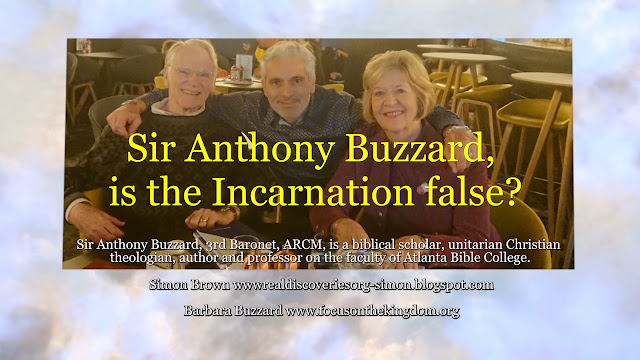
   Sir Anthony Farquhar Buzzard, 3rd Baronet, ARCM (b. 28 June 1935), is a biblical scholar, unitarian Christian theologian, author and professor on the faculty of Atlanta Bible College.  
 Sir Anthony Farquhar Buzzard, 3rd Baronet, ARCM (b. 28 June 1935), is a biblical scholar, unitarian Christian theologian, author and professor on the faculty of Atlanta Bible College. 

Why John 1:1 is not about Jesus

FULL INDEX!

Quick Facts: Testing Traditional Teachings Against the Biblical Evidence!

━━━━━━━━━━━━━━━━━━━━━━━━━━━━━━
RELATED ARTICLES

• John 1:1 — What Does "The Word Was God" Really Mean?
• John 1:3 — Were All Things Made Through Jesus or Through God's Word?
• John 1:14 — What Does "The Word Became Flesh" Really Mean?
• John 17:3 — Who Is the Only True God?
• John 17:5 — Did Jesus Literally Exist Before the World?
• Hebrews 1:2 — Has Hebrews 1:2 Been Mistranslated?
• Matthew 1:23 — Does It Prove Jesus Is God?
• Isaiah 9:6 — Does It Prove the Trinity?
• Scriptures Proving Yahweh Is the One True God and Creator Alone.
• Did the Doctrine of the Trinity Originate with Jesus Christ and His Apostles?

Sunday, 22 February 2026

1 John 1:1, the deception, false translations, and truth!

Infographic examining 1 John 1:1, comparing Bible translations, the original Greek text, and the biblical meaning of the Word of Life.

Does 1 John 1:1 really teach that Jesus personally existed from the beginning? This study examines the original Greek text, compares Bible translations, and explores what John actually meant by "the Word of Life."

1 John 1:1, the deception, false translations, and truth!

1 John 1:1, the deception, false translations, and truth!

1 John 1:1, the deception, false translations, and truth!

Trinitarians often interpret 1 John 1:1 as referring to John 1:1, linking it to Jesus as the logos. However, this interpretation is disputed. 

Berean Literal Bible 1 John 1:1:

That which was from the beginning, that which we have heard, that which we have seen with our eyes, that which we have gazed upon, and our hands have handled, concerning the Word of life--

1 John 1:1 actually refers to the apostles' firsthand experience with Jesus, emphasizing their eyewitness testimony. 

"That which was from the beginning" refers to Jesus' ministry and the apostles' experience with Him. - "We have heard, seen, and handled" highlights the apostles' direct observation of Jesus' life and miracles. 

This aligns with 2 Peter 1:16, where Peter asserts they were "eyewitnesses of His majesty".  

The focus is on the apostles' personal testimony, establishing the credibility of the message.

Simon Brown.

Also read: Jesus Was A Unitarian Monotheist Says: Sir Anthony Buzzard, biblical scholar, unitarian Christian theologian.

━━━━━━━━━━━━━━━━━━━━━━━━━━━━━━

RELATED ARTICLES

• What Is the Truth About John 1:1–5?

• Hebrews 1:2 – Has the Greek Word Been Mistranslated as "Worlds" or "Universe"?

• Does Matthew 1:23 Prove Jesus Is THE GOD?

• The One True God – A Biblical and Historical Examination of the Trinity Doctrine

• Is Believing Jesus Is God Required for Salvation?

━━━━━━━━━━━━━━━━━━━━━━━━━━━━━━


Sunday, 16 October 2022

The Jehovah’s Witnesses Wrong Teaching of Colossians 1:16!

Colossians 1:16

For part 1 please click here: The Jehovah’s Witnesses Wrong Teaching of Colossians 1:15!

We continue from The Jehovah’s Witnesses Wrong Teaching of Colossians 1:15 to The Jehovah’s Witnesses Wrong Teaching of Colossians 1:16! 

The Jehovah’s Witnesses believe and teach Paul is teaching in Colossians 1:16, how GOD created ALL THINGS THROUGH Jesus from the beginning of GOD's creation in Genesis including the heavens, all the angels.

Lets have a look and be sure with what the The Jehovah’s Witnesses Wrongly Teach about Colossians 1:16.

On the Jehovah’s Witnesses site: Watchtower ONLINE LIBRARY http://www.jw.org/  we read about: Colossians 1:16

by means of him all other things were created: God used “his beloved Son” (Col 1:13) in creating the things “in the heavens and on the earth, the things visible and the things invisible.” This would include the millions of other spirit sons in Jehovah God’s heavenly family, as well as the physical universe. (Ge 1:1; Da 7:9, 10; Joh 1:3; Re 5:11) Jesus was Jehovah’s firstborn Son and the only one created directly by God. (Heb 1:6; see study notes on Joh 1:14 and Col 1:15.) Logically, it was to this firstborn Son that Jehovah said: “Let us make man in our image, according to our likeness.”​—Ge 1:26.

all other things: A literal rendering of the Greek text would be “all things.” (Compare Kingdom Interlinear.) However, such a rendering could give the impression that Jesus was not created but was the Creator himself. And that idea would not agree with the rest of the Bible, including the preceding verse, which calls Jesus “the firstborn of all creation.” (Col 1:15; compare Re 3:14, where Jesus is called “the beginning of the creation by God.”) Also, the Greek word for “all” can in some contexts have the meaning “all other,” as for example at Lu 13:2 (“all other”); Lu 21:29 (“all the other”); Php 2:21 (“all the others”). This agrees with Paul’s inspired teaching found at 1Co 15:27: “God ‘subjected all things under his [Christ’s] feet.’ But when he says that ‘all things have been subjected,’ it is evident that this does not include the One who subjected all things to him.” So both the Bible’s teachings as a whole and the probable meaning of the Greek word used here support the rendering “all other things.”​—Compare study note on Php 2:9.

thrones or lordships or governments or authorities: Here Paul refers to positions of authority within Jehovah’s administrative arrangement. Such positions exist among God’s human servants and, as indicated here, also among his perfect spirit creatures. (Ezr 10:15-17; Isa 6:2; 1Co 6:3; Eph 3:10; Heb 13:17; Jude 8, 9) These positions were not simply permitted by Jehovah; rather, they were created by God. He is the Source of these arrangements, and his Son was the active agent in setting them up. The positions of authority mentioned in this verse were “created through him [Jesus] and for him,” and therefore they cannot refer to human governments.

created through him and for him: Although God’s firstborn Son, Jesus, is here said to have been involved in the creation of all things, the Scriptures do not call him the Creator. The preceding verse says that he is “the firstborn of all creation,” and at Re 3:14, he is called “the beginning of the creation by God.” After his own creation, Jesus, personified as “wisdom” in Proverbs chapter 8, became Jehovah’s “master worker.” (Pr 8:1, 22, 30) Jesus’ involvement with creation is described at Pr 8:22-31, which says that Jehovah’s master worker “rejoiced over [God’s] habitable earth, and . . . was especially fond of the sons of men [or, “mankind”].” It is in this sense that Col 1:16 says: “All other things have been created through him and for him.”

Marginal References +Joh 1:3+Joh 1:10; 1Co 8:6; Heb 1:2

As we have seen, how The Jehovah’s Witnesses believe and teach Paul is teaching in Colossians 1:16 how GOD created His heavenly family Angels, as well as the physical universe, THROUGH His Son Jesus.

At this point, It is worth noting how MOST of Christianity also believe and teach how Jesus was WITH GOD creating His heavenly family Angels, as well as the physical universe of Genesis.

Its now time to reveal the Biblical facts, which will hopefully demonstrate to you how this teaching by The Jehovah’s Witnesses of Colossians 1:16, and by most of Christianity is wrong.

Paul tells us in  Colossians 1:16 Berean Literal Bible

because in Him were created all things in the heavens and upon the earth, the visible and the invisible, whether thrones or lordships or rulers or authorities; all things have been created through Him and unto Him.

As we see, because Paul has said: in Him were created all things, The Jehovah’s Witnesses and MOST of Christianity believe and teach how Jesus was WITH GOD creating "ALL THING" such as GODS heavenly family Angels, as well as the physical universe of Genesis.

However, I will now reveal how The Jehovah’s Witnesses and MOST of Christianity believe and teach what is wrong.

Because Paul uses the words saying "ALL THING" most therefore conclude Paul is saying ''ALL THINGS'', as in ''ALL'' of CREATION, from the beginning of GODS creation in Genesis, including the heavens and the angels.

Let us turn our page open to the Greek word (ALL) as seen in the 

Strong's Concordance

pas: all, every

Original Word: πᾶς, πᾶσα, πᾶν

Part of Speech: Adjective

Transliteration: pas

Phonetic Spelling: (pas)

Definition: all, every

Usage: all, the whole, every kind of.

As we see the Original Greek Word is: πᾶς, πᾶσα, πᾶν and means: all, the whole, every kind of.

But notice how Paul does NOT explain or define when "ALL THINGS" have started from.

"ALL THINGS" could be FROM the past, or present, or future.

Paul simply tells us how GOD has: in Him (Jesus) were created "ALL THINGS".

So at this stage we have nothing by Paul INDICATING WHEN "ALL THINGS" in the heavens and upon the earth, the visible and the invisible, whether thrones or lordships or rulers or authorities; "ALL THINGS" have been created through Him and unto Him.

This simply reveals to me at least, that the "ALL THINGS" does NOT include "ALL THINGS" in the past, as IN the very beginning of Geneses like ALL of CREATION, from the beginning of GODS creation including the heavens and the angels.

It is clear to me how the "ALL THINGS" is referring to "ALL NEW THINGS" PAST and PRESENT, and FUTURE, are being RE- NEWED is Jesus.

Lets read what Paul is telling us and what Paul is not telling us.

As we read Paul tells us in the same verse of Colossians 1:16 saying: in the heavens and upon the earth, the visible and the invisible, whether thrones or lordships or rulers or authorities; "ALL THINGS" have been created through Him and unto Him.

Did you notice something there?

Let me show you please what Paul did NOT say there in Colossians 1:16.

1. Paul did NOT say ANYTHING about the PAST Genesis creation, 

2. Paul did NOT say ANYTHING about the PAST heavens being created.

3. Paul did NOT say ANYTHING about the Angels being created.

But instead notice what Paul DID SAY.

Paul said: "IN" the heavens and "UPON" the earth.

Did you notice: "IN" the heavens and "UPON" the earth?

To create something that is "IN" the heavens and "UPON" the earth, would simply mean the HEAVENS and the EARTH, were already created and where already there.

But lets now continue to Paul's next statement saying:  ''ALL THINGS'' have been created through Him and unto Him.

Did you see the SAME and IDENTICAL words by Paul saying: ''ALL THINGS''?

So as we see and read, Paul is NOT telling us about ''ALL THINGS'' have been created through Jesus like the beginning of creation.

Paul is telling us how GOD is renewing "ALL THINGS" through Christ that was ALREADY "IN" the heavens and ALREADY "UPON" the earth.

However I always like to save the best until last.

And I have a question!

How can we be sure with what I am saying here is correct?

Because what I am saying is that Paul is NOT referring to what most Christians believe by saying "ALL THINGS" like the beginning of creation in and before Genesis like the PAST HEAVENS and the EARTH and the angels.

Paul is NOT referring to "ALL THINGSin the Genesis CREATION.

But instead Paul is telling us how GOD is NOW RE- creating ''ALL THINGS'' that are already "IN" the heavens and "UPON'' the earth, when Christ was given ALL authority in heaven and on the earth.

And this is seen by going to Matthew 28:18, and there we read what Jesus said Himself: Berean Literal Bible

And having come to them, Jesus spoke to them, saying, "All'' authority in heaven and on the earth has been given to Me. 

Please note the SAME and IDENTICAL words of Paul's saying: All authority "IN" heaven and "ON" the earth has been given to Me. 

The SAME and IDENTICAL words by Paul and Jesus saying: "IN" heaven and "ON" the earth are referring to IN HEAVEN and ON earth as being already created beforehand by GOD ALONE, and then are being RENEWED through Christ when He was given "All'' authority ''IN heaven and ''ON'' the earth, by GOD.

The SAME and IDENTICAL words by Paul and Jesus saying: "IN" heaven and "ON" the earth are NOT referring to the FIRST AND PAST HEAVEN and EARTH as being created beforehand by or through Jesus.

But instead the SAME and IDENTICAL words by Paul and Jesus saying: "IN" heaven and "ON" the earth are referring to the PRESENT NEW heaven and the NEW earth: "IN" heaven and "ON" the earth.

How can we be sure of this, that both Jesus and Paul are referring to the NEW heaven and the earth?

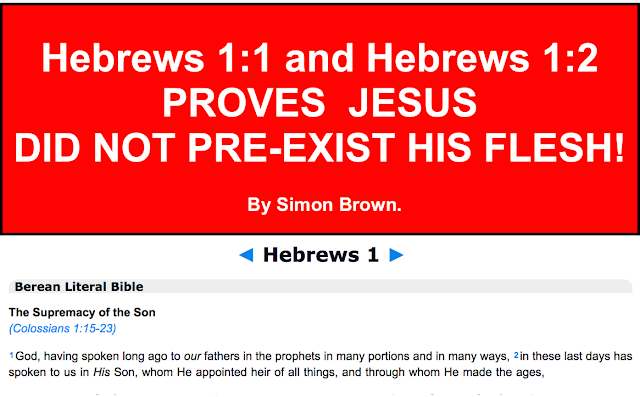
The answer is given by Paul in Hebrews 1:1 to 1:2.

Hebrews 1:1,2.

Berean Literal Bible

God, having spoken long ago to our fathers in the prophets in many portions and in many ways,

in these last days has spoken to us in His Son, whom He appointed heir of ''ALL THINGS'', and through whom He made the ages,

Note, Jesus is not mentioned in Hebrews 1:1, as we would expect to say: God, having spoken long ago (THROUGH HIS SON) in many portions and in many ways.

But we instead read in the next verse by Paul when GOD DID speak  (THROUGH HIS SON), by saying: in these last days has spoken to us in His Son, whom He appointed heir of  "ALL THINGS* and through whom He made the ages,

Again note: (in these last days) has spoken to us in His Son.

Also note the SAME and IDENTICAL words saying:  "ALL THINGS''.

My Conclusion!

The misunderstanding within most of Christianity is that I believe most are thinking Paul was referring to Jesus being with GOD creating "ALL THINGS'' as in the Genesis creation.

But instead I believe Paul was meaning "ALL THINGS'' FROM the Genesis creation GOD is RE-NEWING THROUGH Christ Matthew 28:18, hence: all things have been created through Him and unto Him.

Colossians 1:16

And it is also worth noting how the translations of the word "WERE" and ''HAVE'' been created through Him and unto Him, is deceptive.

This is because the word "WERE" and ''HAVE'' deceives us into believing, "WERE" and ''HAVE'' ALREDY taken place as in the Genesis creation.

And so we are deceived into thinking what it looks like that: because in Him "WERE'' created all things in the heavens and upon the earth, the visible and the invisible, whether thrones or lordships or rulers or authorities; all things ''HAVE'' been created through Him and unto Him. Colossians 1:16 Berean Literal Bible


Strong's Concordance ktizó: to build, create

As we see in the Strong's Concordance the Greek word for ''WERE'' and ''HAVE''  ktizó: means to build, create.

Original Word: κτίζω

Part of Speech: Verb

Transliteration: ktizó

Phonetic Spelling: (ktid'-zo)

Definition: to build, create

Usage: I create, form, shape, make, always of God.

So in other words GOD is Re-building, Re-creating, Re-forming, Re-shaping, Re-making  "ALL THINGS'' through Him (Jesus) and unto Him.

Paul is referring to the NEW creation as seen by going back to the beginning of Paul's Colossians 1:13 Berean Literal Bible

who has delivered us from the dominion of darkness and ''transferred'' us into the kingdom of His beloved Son.

Notice the word ''transferred'' which means: I cause to change its place, move out of its place; I translate, transfer, remove.

Strong's Concordance methistémi: to change, pervert
As we see and read, how ''transferred'' means to change its place, move out of its place; transfer, us into the kingdom of His beloved Son, where GOD is Re-building, Re-creating, Re-forming, Re-shaping, Re-making the NEW creation:  "ALL THINGS'' through Him (Jesus) and unto Him Colossians 1:16.

Paul is NOT contradicting Jesus teachings, but is perfectly confirming and agreeing with Jesus as seen in Matthew 28:18

And having come to them, Jesus spoke to them, saying, "All'' authority in heaven and on the earth has been given to Me. 

And Jesus was referring to when GOD had given His SON "All'' authority, PRESENT and FUTURE.

And this is all confirmed by Paul in Hebrews 1:2, in these last days (meaning PRESENT and FUTURE GOD), has spoken to us in His Son, whom He appointed heir of "ALL THINGS'', and through whom He made the ages.

We DO read in Hebrews 1:1:  (how in the BEGINNING of days),  BEFORE Jesus was born: GOD having spoken to us in the prophets in many portions and in many ways,

We DO NOT read in Hebrews 1:1: how GOD has "always" spoken to us in or THROUGH His Son, which is what we would expect to hear and read IF what most say and believe was true.

And we instead hear and read in the next statement by Paul in Hebrews 1:2 how on Jesus arrival, GOD: has spoken to us in His Son, whom He appointed heir of "ALL THINGS*, (PRESENT and FUTURE), and through whom He made the ages.

To understand the meaning of (AGES), please read my article: The FALSE translation of Hebrews 1:2.

I also believe another terrible problem is that The Jehovah’s Witnesses including most of modern Christianity are using countless biased false modern Bible translations, and most of Christianity are not aware of that shocking truth, which is deceiving most of Christianity from the truth: 

See my article: QUICK FACTS To The Trinitarian FALSE TEACHINGS and FALSE Bible TRANSLATIONS!

I am Simon Brown.

Thank you for reading my independent research.

-------------------------------------------------------------

Related Articles:

The Trinity Delusion An exposé of the doctrine of the Trinity Colossians 1:16-18
Click here to read this article by The Trinity Delusion. Colossians 1:16.


Hebrews 1:2.

Colossians 1:16 and 1:17.

Colossians 1:15

Revelation 3:14.

John 1:1 - 1:4

FALSE Bible TRANSLATIONS!

Tuesday, 6 July 2021

The FALSE Interpretation of Colossians 1:16

.

The FALSE Interpretation of Colossians 1:16


The FALSE Interpretation of Colossians 1:16

Does Colossians 1:16 Really Teach That Jesus Created the Genesis Universe?

Research by Simon Brown

One of the most frequently quoted passages used to prove that Jesus is God and the Creator of the universe is Colossians 1:16.

A good example can be found on the popular Trinitarian website CompellingTruth.org, where Colossians 1:16 is cited in support of the belief that Jesus created all things.

The English Standard Version (ESV) reads:

"For by him all things were created, in heaven and on earth, visible and invisible, whether thrones or dominions or rulers or authorities—all things were created through him and for him."

At first glance, this appears to teach that Jesus personally created the heavens and the earth described in Genesis.

But does Paul actually say that?


The First Translation Difference

The Greek text begins with the words:

ἐν αὐτῷ

These words literally mean:

"In Him."

For this reason, translations such as the Berean Study Bible translate the verse:

"For in Him all things were created..."

rather than:

"For by Him all things were created..."

This difference is significant.

The Greek preposition ἐν (en) normally means "in." Some translators understand it as expressing agency and therefore translate it "by Him," while others retain the more literal wording "in Him."

Whether Paul intended "in," "through," or "by" is therefore an interpretive decision rather than something explicitly stated by the Greek text.

For that reason, every reader should carefully examine the context before deciding what Paul meant.


The Greek Verb

The next words translated:

"were created"

come from the Greek verb:

ἐκτίσθη (ektisthē)

This is the aorist passive form of κτίζω (ktizō), meaning:

  • to create

  • to make

  • to form

  • to build

After examining the Greek more carefully, I realised that the words "were created" are a correct translation of this Greek verb.

Therefore, the issue is not whether the verb has been mistranslated.

The real question is much more important.


Which "All Things" Is Paul Talking About?

The crucial question is:

What are the "all things" Paul is referring to?

Most Christians immediately assume Paul is speaking about the original creation recorded in Genesis.

However, the surrounding context suggests another possibility.

Throughout the New Testament we are repeatedly told that God exalted Jesus after His resurrection and gave Him supreme authority.

Jesus Himself said:

"All authority has been given to Me in heaven and on earth."
(Matthew 28:18)

Peter declared:

"Therefore let all the house of Israel know assuredly that God has made this Jesus, whom you crucified, both Lord and Christ."
(Acts 2:36)

Paul also writes:

"Therefore God highly exalted Him and bestowed on Him the name that is above every name."
(Philippians 2:9)

Likewise Paul writes elsewhere:

"...He raised Him from the dead and seated Him at His right hand... far above every rule and authority and power and dominion... and He put all things under His feet."
(Ephesians 1:20–22)

Notice the order.

God first raises Jesus.

God then exalts Jesus.

God then gives Jesus all authority.

God then places all things under Him.

This raises an important question.

Could Colossians 1:16 be describing everything God established under Christ's authority after His exaltation, rather than describing the original creation in Genesis?


Notice What Paul Actually Mentions

Instead of describing the creation account found in Genesis, Paul immediately says:

"...whether thrones or dominions or rulers or authorities..."

These are positions of authority and government.

Paul does not mention:

  • Adam

  • Eve

  • the Garden of Eden

  • the sun

  • the moon

  • the stars

  • the animals

  • the sea

  • or the six days of creation.

Instead, his emphasis is on thrones, dominions, rulers, authorities, Christ's supremacy, His resurrection, and the reconciliation of all things through Him.

That context deserves careful consideration.


The Context Must Determine the Meaning

The words "all things" do not always mean every individual thing in existence throughout all time.

Throughout Scripture, the phrase "all things" often refers to all things within the context being discussed.

The immediate context of Colossians is Christ's supremacy, His resurrection, His Kingdom, His authority, and God's purpose accomplished through Him.

For that reason, I believe Paul is describing the new order established through God's exalted Messiah rather than teaching that Jesus personally created the Genesis universe.

Whether readers agree or disagree with that conclusion, the context itself should be allowed to determine the meaning instead of assuming Genesis creation is being discussed before the passage has been examined.


Conclusion

Colossians 1:16 does indeed say that "all things were created."

The real question is not whether they were created.

The real question is:

Which "all things" is Paul referring to?

When the surrounding verses are carefully examined, Paul's emphasis is upon Christ's exaltation, His authority, His supremacy, and the reconciliation of all things through Him.

This opens the possibility that Paul is speaking about the new order God established in His Messiah after His resurrection and exaltation, rather than the original creation recorded in Genesis.

Every reader should therefore examine the whole context carefully before concluding that Colossians 1:16 teaches that Jesus created the Genesis heavens and earth.


Research by Simon Brown

"Test all things; hold fast what is good." (1 Thessalonians 5:21)


The FALSE Translations of Colossians 1:16
----------------------------------------------------

Related Articles:

Colossians 1:16 and 1:17.


HEBREWS 1:1


Saturday, 30 January 2021

Did GOD become flesh as the MAN Jesus?

Watch videos here:


Is Jesus God?

Read the full article here: 1 Timothy 3:16​, Yet AGAIN, Another Trinitarian DECEPTION. 


I John 5:7.


                                   Is the Trinity a MYSTERY?

Please read the full article here: 

1 John 5:7. The GREATEST Trinitarian FORGERY In History. https://wwwrealdiscoveriesorg-simon.blogspot.com/2017/06/1-john-57-greatest-trinitarian-forgery.html


Is Jesus God?

Did I Jesus say: I Am GOD, or GOD is my GOD?

WHO IS THE TRUE AND ONLY BEGOTTEN SON OF GOD?

GOD CANNOT DIE, JESUS DIED.


Friday, 18 September 2020

The FALSE Translations of Jude 1:5? WHO saved the children of Israel out of the land of Egypt, The Lord GOD, or The lord Jesus?


Jude 1:5?

The FALSE Translations of Jude 1:5? 

WHO saved the children of Israel out of the land of Egypt, 

The Lord GOD, or The lord Jesus? 

Now these, who were more noble than those in Thessalonica, received the word with all readiness, on every day examining the Scriptures, whether these things were so. Acts 17:11

There are Trinitarians who believe Jude 1:5 says:

Now I want to remind you, you having known all this, that Jesus, having saved at one time a people out of the land of Egypt, afterward He destroyed those not having believed. Jude 1:5.

Jude 1:5.

We also see many more translations below saying (JESUS) having saved at one time a people out of the land of Egypt:

Jude 1:5.
NET Bible Jude 1:5.
DRB Jude 1:5.
Ellicott's Commentary for English Readers tells us:

How that the Lord.—“How that” depends upon “remind,” not upon “have known.” There is very strong evidence in favour of substituting “Jesus” for “the Lord;” a most remarkable reading, showing how, in Christian language, the Man Jesus had become identified with the Eternal Son. The use of “Christ” in 1Corinthians 10:4, though less striking, is similar.

As we see some Trinitarians believe Jude 1:5 is a proof text proving the Man Jesus had become identified with the Eternal Son, also proving Jesus pre-existed His flesh.

Could this be correct that Jude 1:5 was teaching that Jesus was the person who saved Israel out of the land of Egypt?

The simple answer is given in Exodus 12:51, so lets be a berean Jew and have a look:

World English Bible

It happened the same day, that Yahweh brought the children of Israel out of the land of Egypt by their armies.

Exodus 12:51.

We clearly and plainly read Exodus 12:51 saying the person was: Yahweh brought the children of Israel out of the land of Egypt, and NOT Jesus.

WHO is Yahweh?

We know from what both GOD and Jesus told us that Yahweh is the Only One True GOD alone, who is the GOD and Father of Jesus Christ as told in Deuteronomy 6:4, Mark 12:29, Matthew 3:17, John 10:36, John 17:5, and many more scriptures throughout the Bible, which never say GOD is three persons or that GOD is the SON.

What's written in the oldest translations, Jesus or LORD?

Notice in one of the oldest Bibles of the Codex Sinaiticus the word for LORD, and NOT Jesus.

Jude 1:5

The word LORD agrees with Exodus 12:51 saying the person was Yahweh the One True GOD and NOT Jesus:

It happened the same day, that Yahweh brought the children of Israel out of the land of Egypt by their armies. World English Bible

Notice in the NASB Lexicon how the reading is LORD κύριος (kurios), and NOT Jesus.

Exodus 12:51

Conclusion.

The Biblical facts again prove this is yet again another one of COUNTLESS FALSE translations with the word (Jesus) added that is clearly seen and proved to be FALSE, deceiving people into believing Jesus is GOD or pre-existed His flesh and is instead LORD for Yahweh The LORD GOD.

Sadly most of Christianity still refuse to believe the Biblical facts, and seem to dislike people who teach the truth.

It seems like History has repeated itself, when GOD sent His Prophets to save His people, but were not believed, and were mostly killed, as Jesus was sent teaching the truth, to save the world, who was mostly not believed, and was also hated and killed.

Thank you for reading my research.

Seek and you will find said Jesus. 

Simon Brown.

Here is a comment from the professor Bible Scholar Sir Anthony Buzzard:

The Metzger  comments on the text starts by saying that this is an impossible reading  (ie, it is a blatant corruption, and they gave it a D rating. Later on they waver and say that “Jesus” is attested well.

I would say with many commentators that the correct reading is “the Lord”

Elsewhere Jude never says “Jesus” but  Jesus Christ.

I would say that this is a blatant error since it contradicts the rest of the Bible!

The suspicion is that some scribe corrupted the text to read Jesus.

Can Jesus be older than his ancestor David So I suggest,

You can try the argument from the singular pronouns

I am YHVH, Does that sound like 3 persons!!!?

God is an “I”   ONE PERSON, thousands and thousands of times.

Simon, Yes indeed Ex 12:50  is YHVH = the LORD

That cannot be Jesus, which would make two GODS!

Anthony.

Here is an article by Michael in Epistles, Koine Greek:

Lord or Jesus? Metzger’s Comments on Jude 1:5

December 20, 2016Michaelby Michael in Epistles, Koine Greek0 Comments

In Jude 1:5 of the English Standard Version (ESV), we read that Jesus delivered the Israelites out of Egypt:

Now I want to remind you, although you once fully knew it, that Jesus, who saved a people out of the land of Egypt, afterward destroyed those who did not believe.

Other translations, including the KJV, NASB and NIV, instead read ‘Lord’ in place of ‘Jesus’ here.

Why the discrepancy?

This is not just a random decision to replace ‘Jesus’ with ‘Lord’, or vice versa. The translators are looking at the manuscript evidence and deciding what they believe the original reading most likely is. The critical editions of the Greek New Testament that many modern translations rely heavily on, the Nestle-Aland 26th and 27th editions, read ‘Lord’ in this verse. It was only in the recently released edition, the 28th edition, that the reading ‘Jesus’ was preferred.

The decisions of which readings to prefer in the critical editions are not made by one person, but rather by a committee of scholars. Dr. Bruce Metzger was one of several scholars who participated in the committee that chose ‘Lord’, and in his textual commentary he communicates the exact reason why it was preferred:

Despite the weighty attestation supporting Ἰησοῦς (A B 33 81 322 323 424c 665 1241 1739 1881 2298 2344 vg cop, bo eth Origen Cyril Jerome Bede; ὁ Ἰησοῦς 88 915), a majority of the Committee was of the opinion that the reading was difficult to the point of impossibility, and explained its origin in terms of transcriptional oversight (ΚΧ being taken for ΙΧ). It was also observed that nowhere else does the author employ Ἰησοῦς alone, but always Ἰησοῦς Χριστός. The unique collocation θεὸς Χριστός read by P72 (did the scribe intend to write θεοῦ χριστός, “God’s anointed one”?) is probably a scribal blunder; otherwise one would expect that Χριστός would be represented also in other witnesses. The great majority of witnesses read ὁ before κύριος, but on the strength of its absence from א Ψ and the tendency of scribes to add the article, it was thought best to enclose ὁ within square brackets. (Metzger 723)

After explaining the Committee’s rationale to prefer ‘Lord’ over ‘Jesus’, Metzger then follows with his own dissenting opinion:

[Critical principles seem to require the adoption of Ἰησοῦς, which admittedly is the best attested reading among Greek and versional witnesses (see above). Struck by the strange and unparalleled mention of Jesus in a statement about the redemption out of Egypt (yet compare Paul’s reference to Χριστός in 1 Cor 10:4), copyists would have substituted (ὁ) κύριος or ὁ θεός. (Metzger 724)

In Bruce Metzger’s dissent, he states that ‘Jesus’ is “the best attested reading among Greek and versional witnesses” and that “critical principles seem to require the adoption of Ἰησοῦς [Jesus].” In other words, a theologically unbiased decision based purely on the principles of textual criticism would prefer ‘Jesus’ here—not ‘Lord’.

The reason for it not being chosen was that a majority of the Committee felt “the reading was difficult to the point of impossibility.” They were convinced, it seems, of the extreme unlikelihood that Jude would have written that Jesus was alive and active within an Old Testament narrative. Perhaps they couldn’t stomach the idea that the earliest Christians believed Jesus existed prior to His physical human birth, something scripture itself attests to in John 1:1.

Fortunately, the reading ‘Jesus’ is now chosen in the Nestle’s critical text, even though Dr. Metzger is unfortunately no longer with us.

Metzger, Bruce M. A Textual Commentary on the Greek New Testament; a Companion Volume to the United Bible Societies’ Greek New Testament (2nd Ed.). N.p.: Hendrickson Pub, 2006. Print.